Starch-based binder, household-scale making and waste-stream material as an input.
All workMaterial research / 2025
NetWork · Bio-gradient tactile library
What if the material refused to be a block?
A failed bioplastic cast became the beginning of a family of mesh-reinforced skins. NetWork turns recovered nets, a starch binder and repeated small tests into one tactile surface.
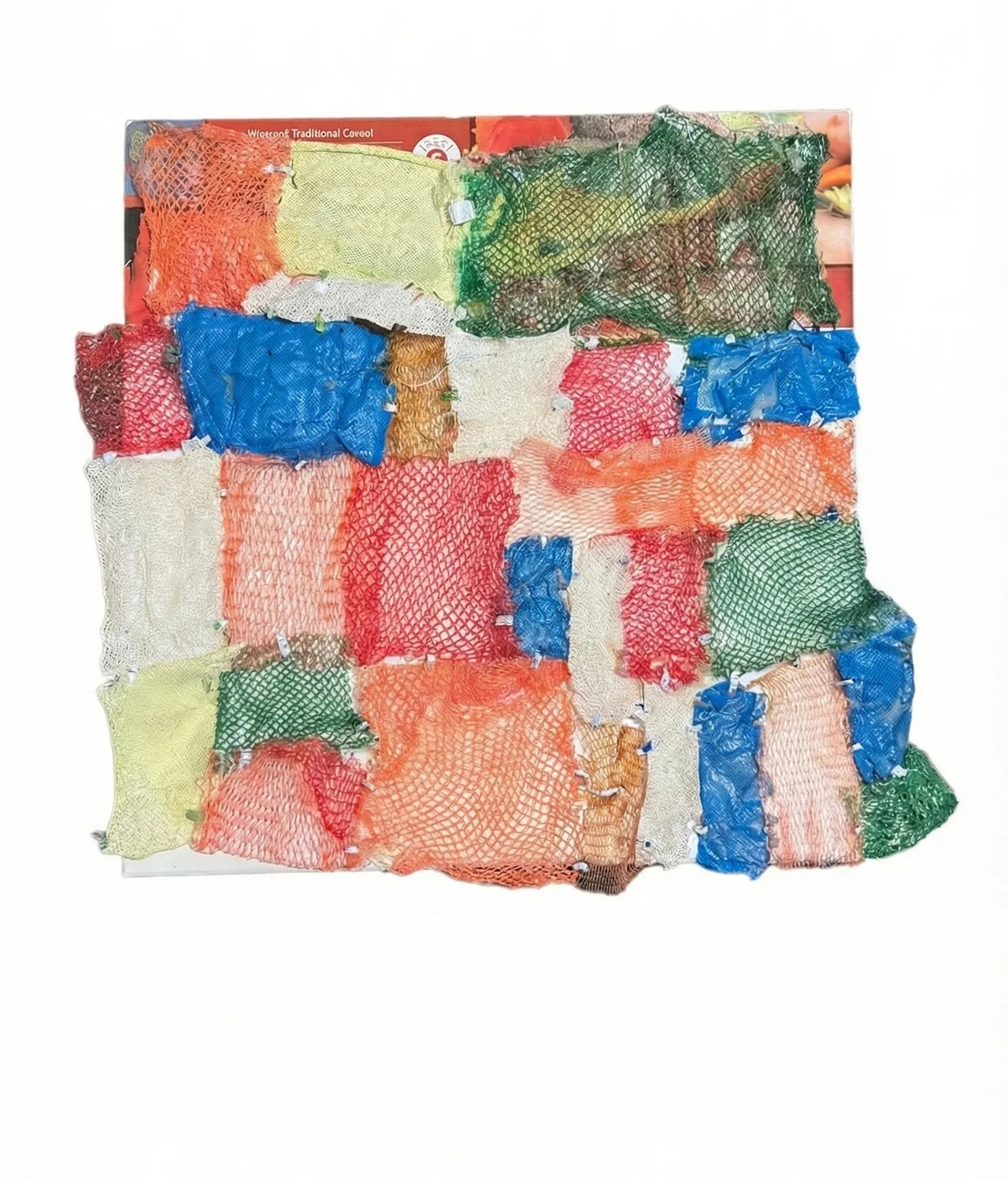
A presentation cutout of the photographed, assembled surface—not a digital material render.
The question
Can household waste become a material worth touching?
The starting point was a kitchen-scale material inquiry, not a finished-product brief. I looked at how starch, glycerin, acid and recovered fibres behaved under small changes in recipe, thickness and drying. The research drew on DIY-Materials, material-driven design and the practice of keeping failed samples as evidence.
I planned controlled one-variable trials alongside experiments that let flow, shrinkage and chance reveal a direction. That distinction matters: the early notes describe an intended method; the photographs and later batch record show what I actually made and observed.
Project statusIndependent material study · Physical samples · 2025
My role: Research, formulation, hands-on testing, sample making, documentation and final presentation.
Working principleFollow the material’s behaviour before deciding what form it should take.
Project boundary. This is an independent concept — not a claim of commissioned, built, tested, or approved work beyond what this page documents. Environmental performance and future applications were not tested.
The work in one line
- 01CastTry solid forms.
- 02ObserveRecord cracking, warp and moisture.
- 03ReframeLet the mesh carry the skin.
- 04ComposeBuild a gradient of hand-feel.
Before there was a NetWork
Start with a table of possibilities.
The first inquiry was called Looking 4 Plastic? I cast small starch mixes with changes in glycerin, pectin, paper, fabric, coffee and colour. Some were brittle; some stayed damp. I kept them side by side to learn what each change did before deciding what the material should become.
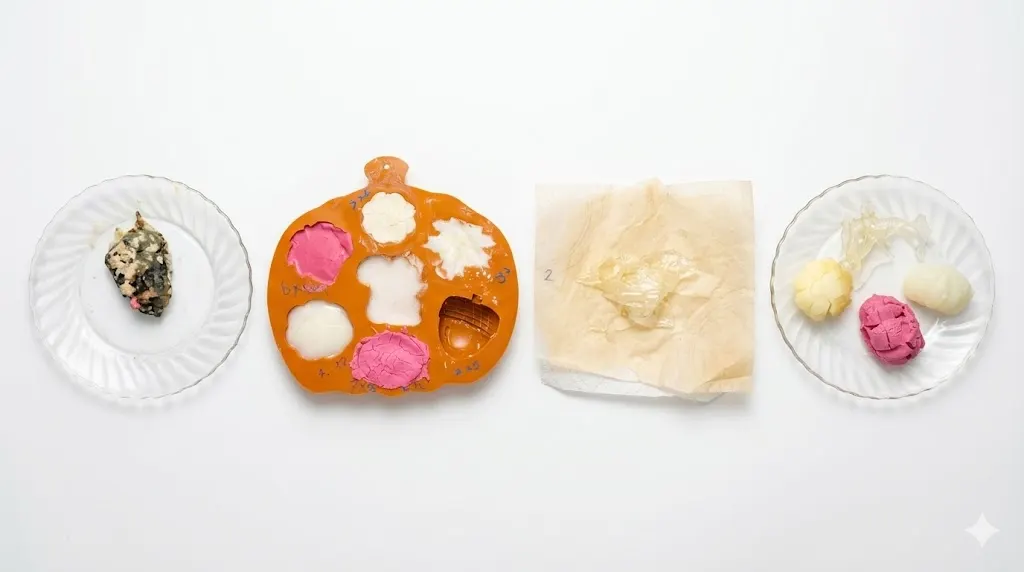
An edited project photograph of first-stage casts and film; these are exploratory samples, not the finished surface.
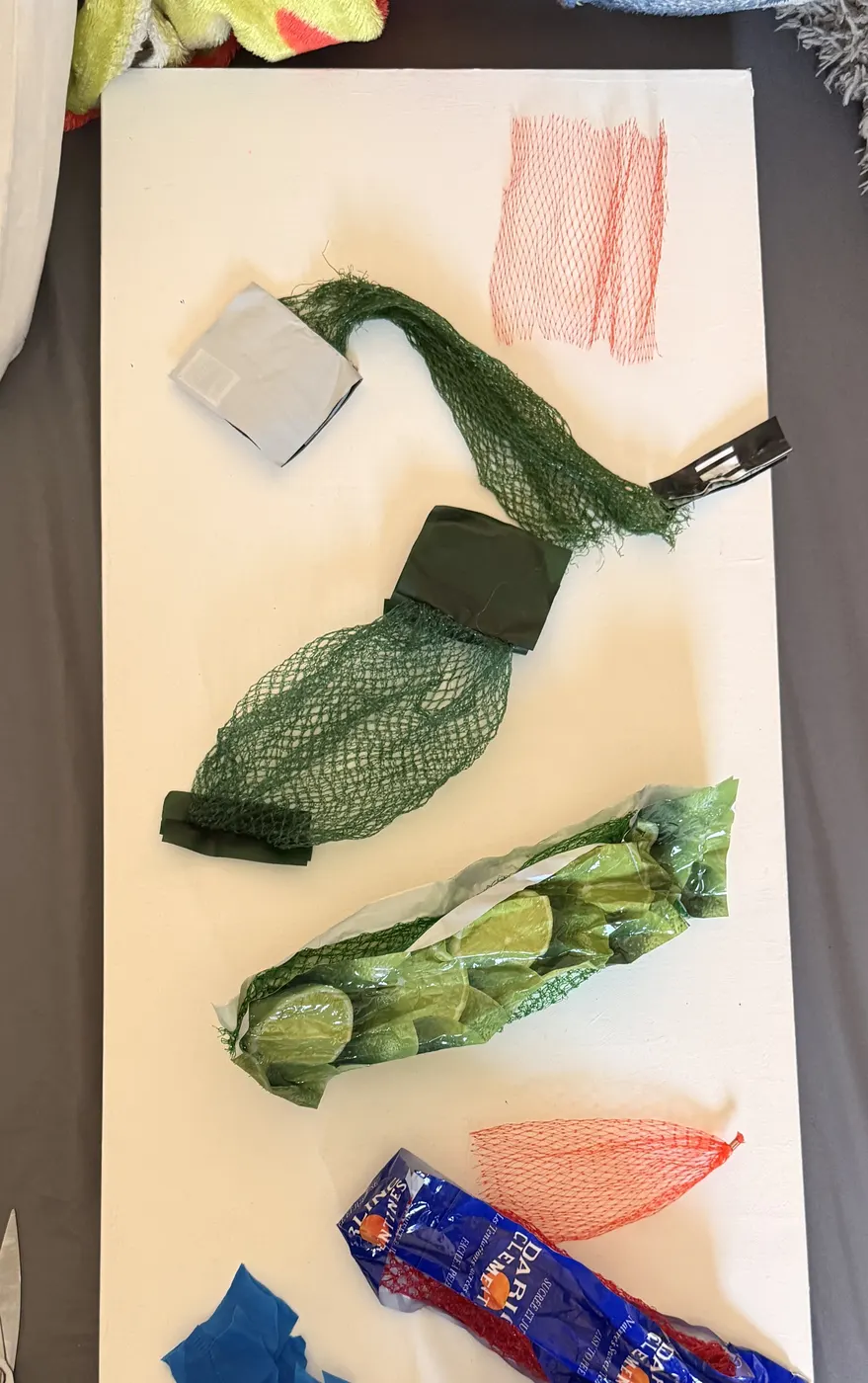
Recovered nets and fabric offcuts laid out before coating. Their open weave later changed the direction of the work.
How the search was organized
Controlled intention. The early research outline proposed changing one variable at a time and recording tactile and curing observations. The surviving material shows recipe variants and photographs, not a complete laboratory log for every cast.
Chance with a purpose. Letting mixtures flow or dry in different ways exposed unexpected surface qualities. By the final stage, the designer’s judgement of when a sample could flow or fuse mattered more than random selection.
01 / Evidence changed the form
The solid version did not hold.
Thicker casts shrank and fractured during curing. Some retained moisture; thin unsupported films could warp. Rather than hide those pieces, I kept them in the record because they exposed a mismatch between the binder and the rigid object I was trying to force it to become.
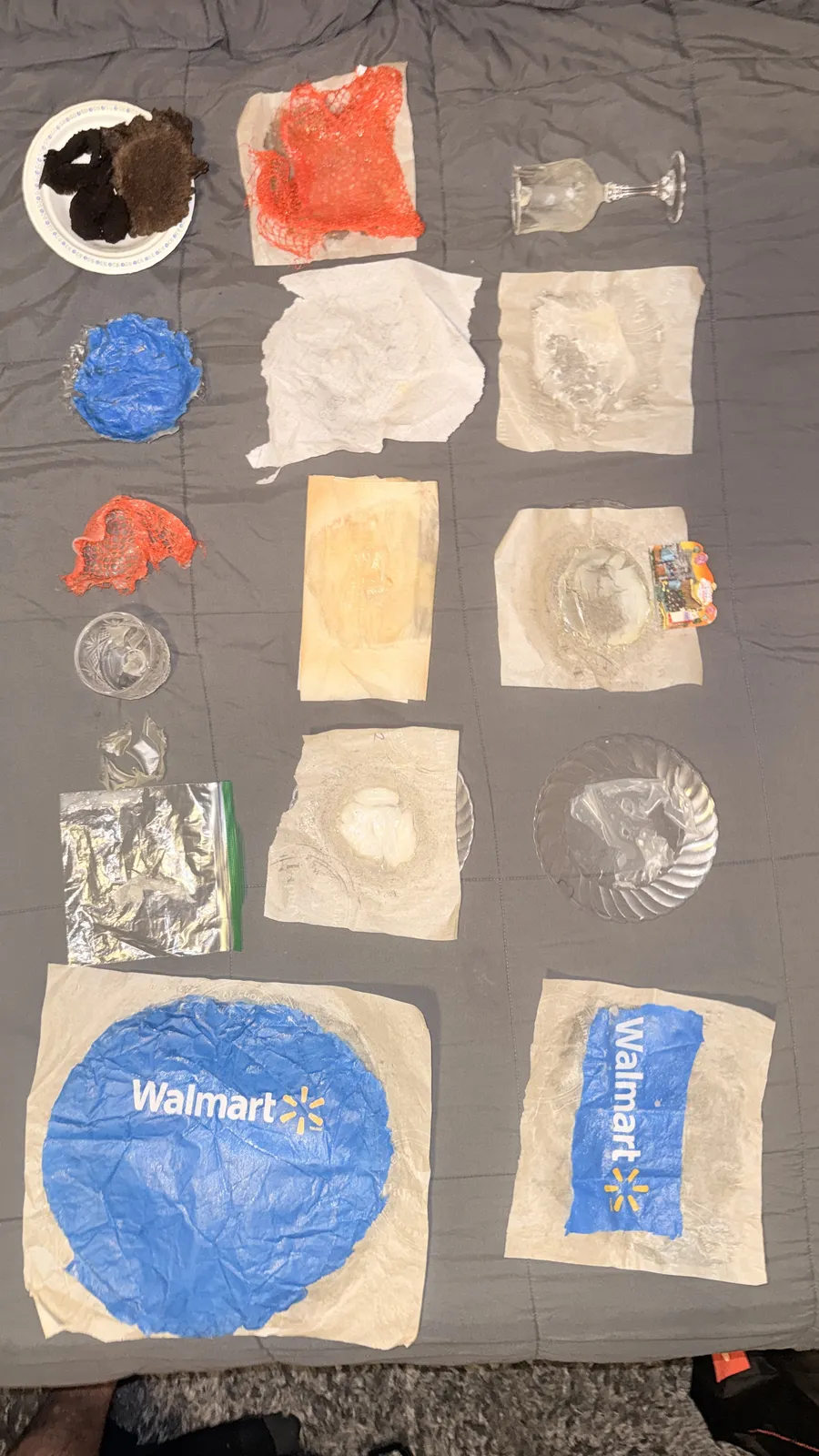
The starting matrix kept different ingredients, thicknesses and results in one view.
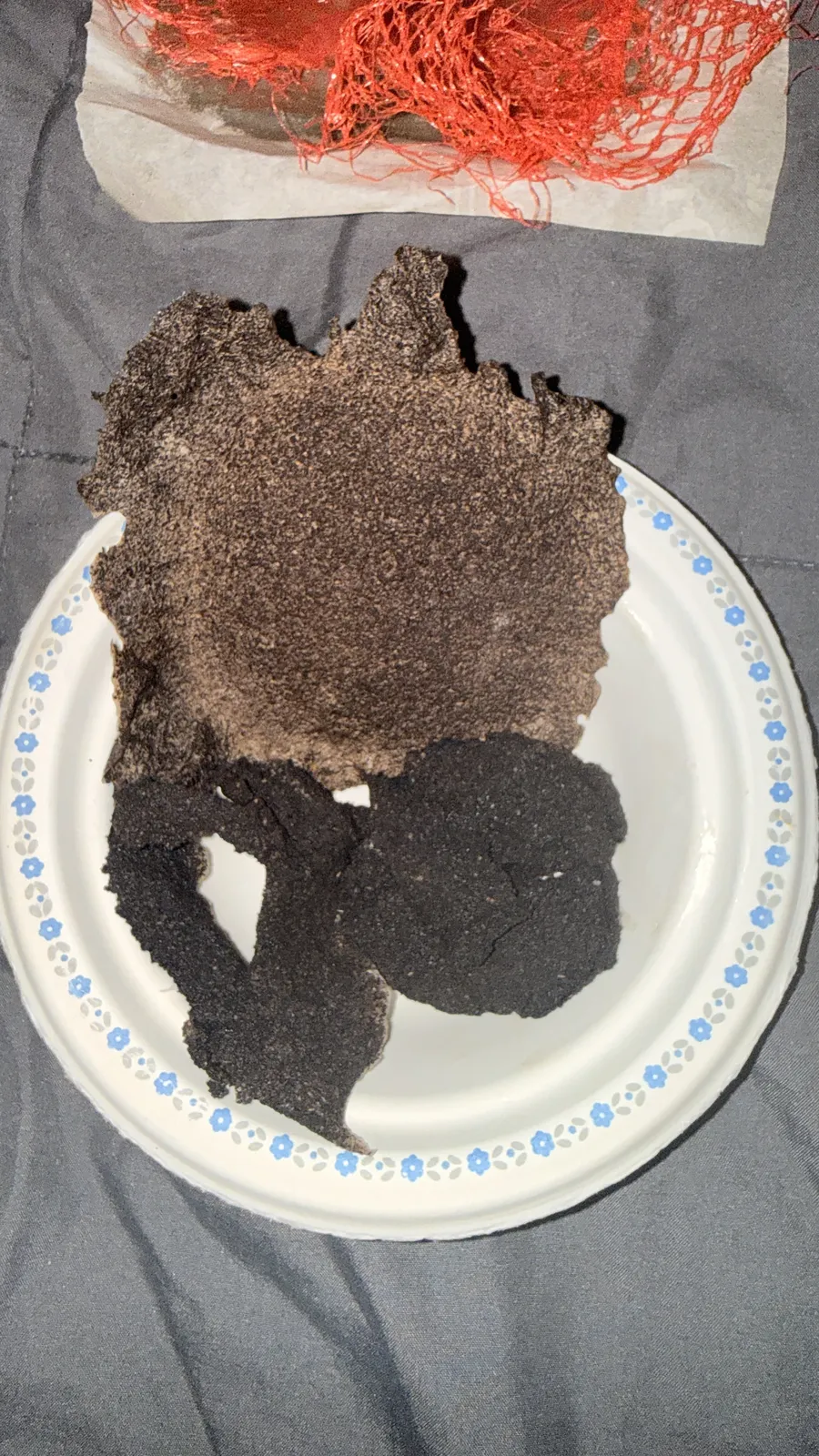
This solid test did not yield a viable skin.
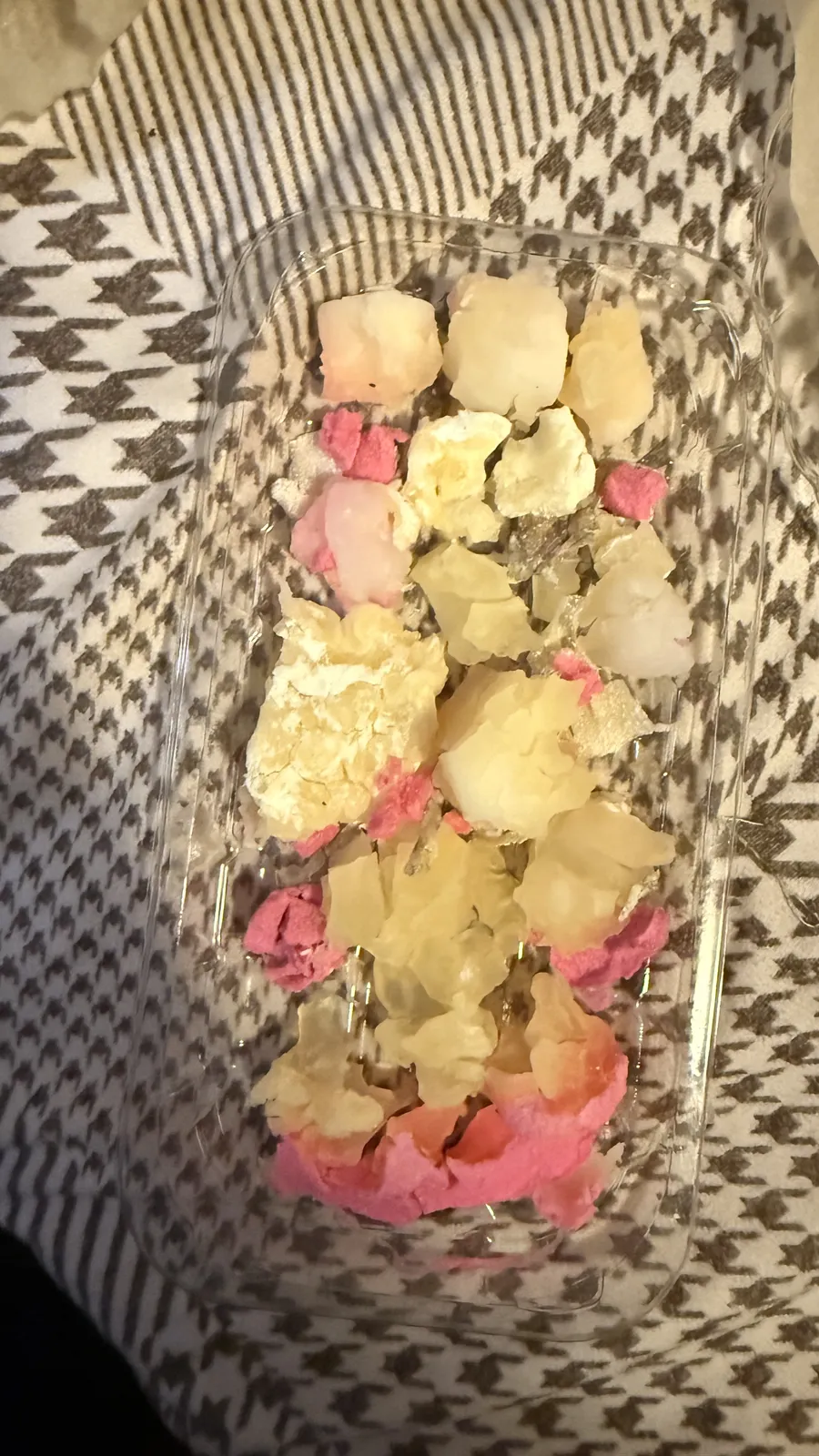
The cast broke apart. This is a source photograph, not a polished proposal image.
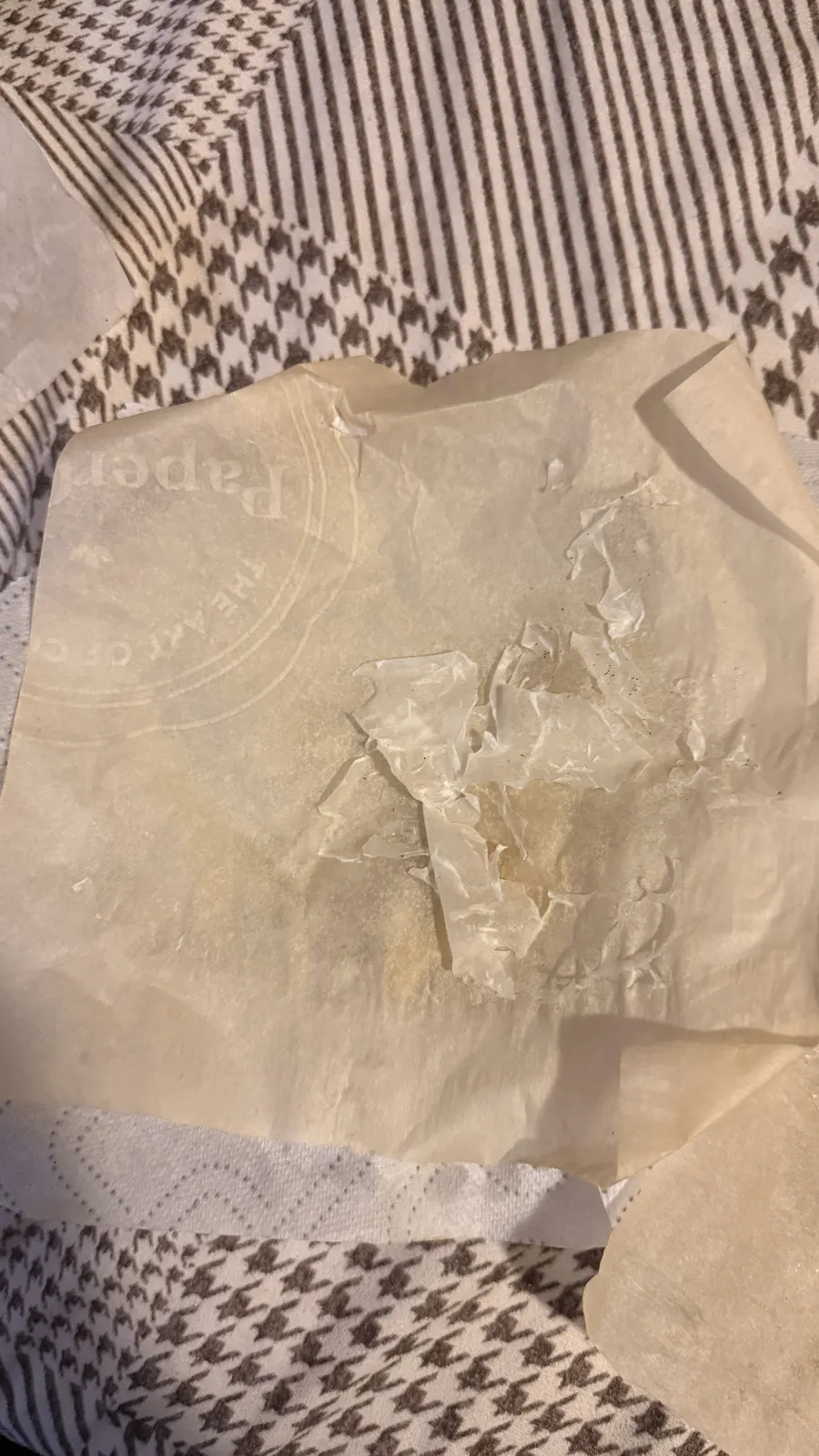
Thin film alone was not yet the answer.
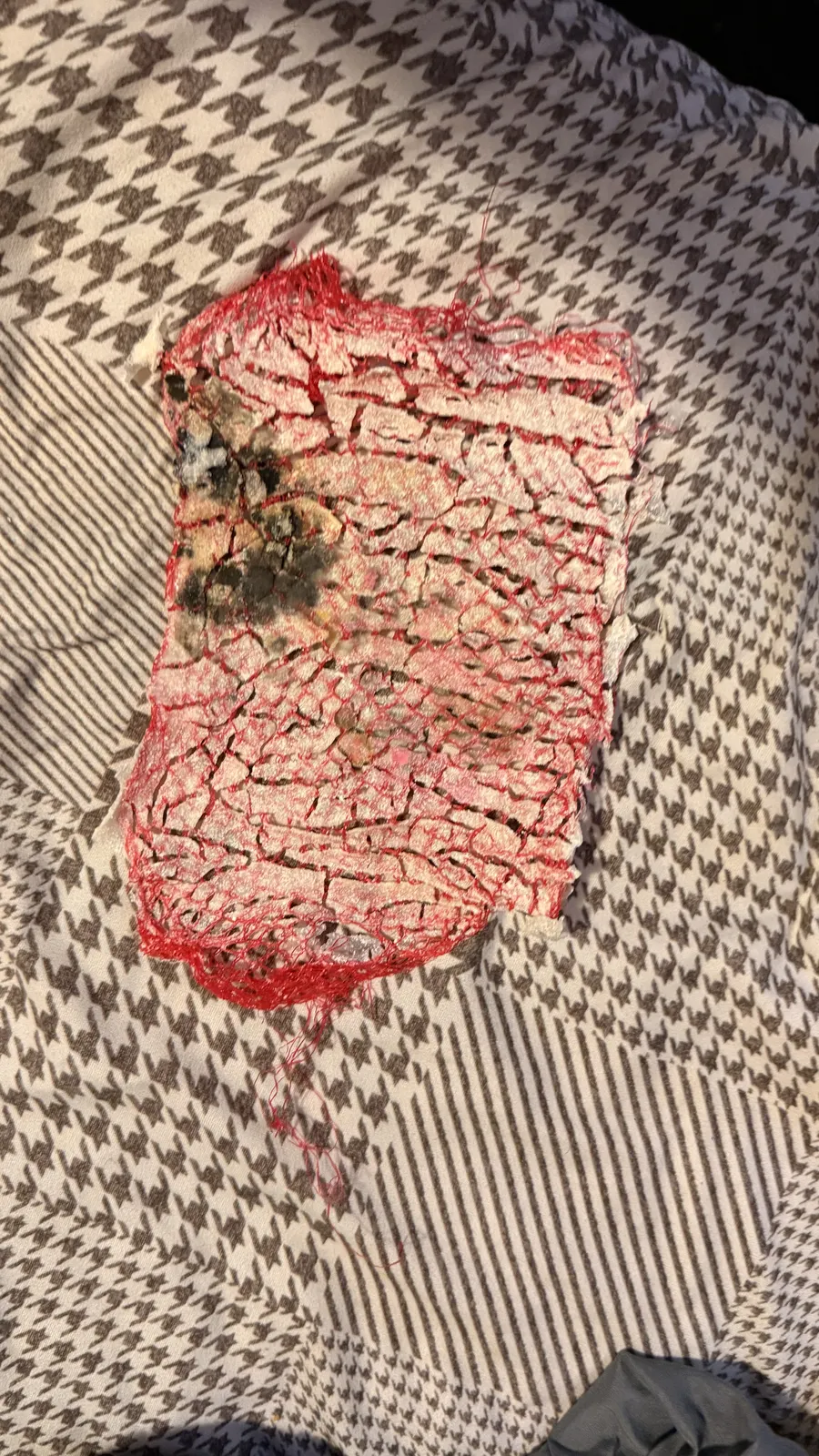
Adding net was promising, but early reinforced trials could still crack.
Design decision
Stop forcing the material to behave like a brick. Work with the binder as a thin skin, and use reclaimed mesh as visible reinforcement.
02 / From solid to skin
Let the structure show.
Recovered onion and fruit nets, reusable-bag mesh and fibrous additions became more than filler. Their open weave gave the binder somewhere to grip while leaving the texture legible to the hand and eye. The material’s irregularity became the design language.
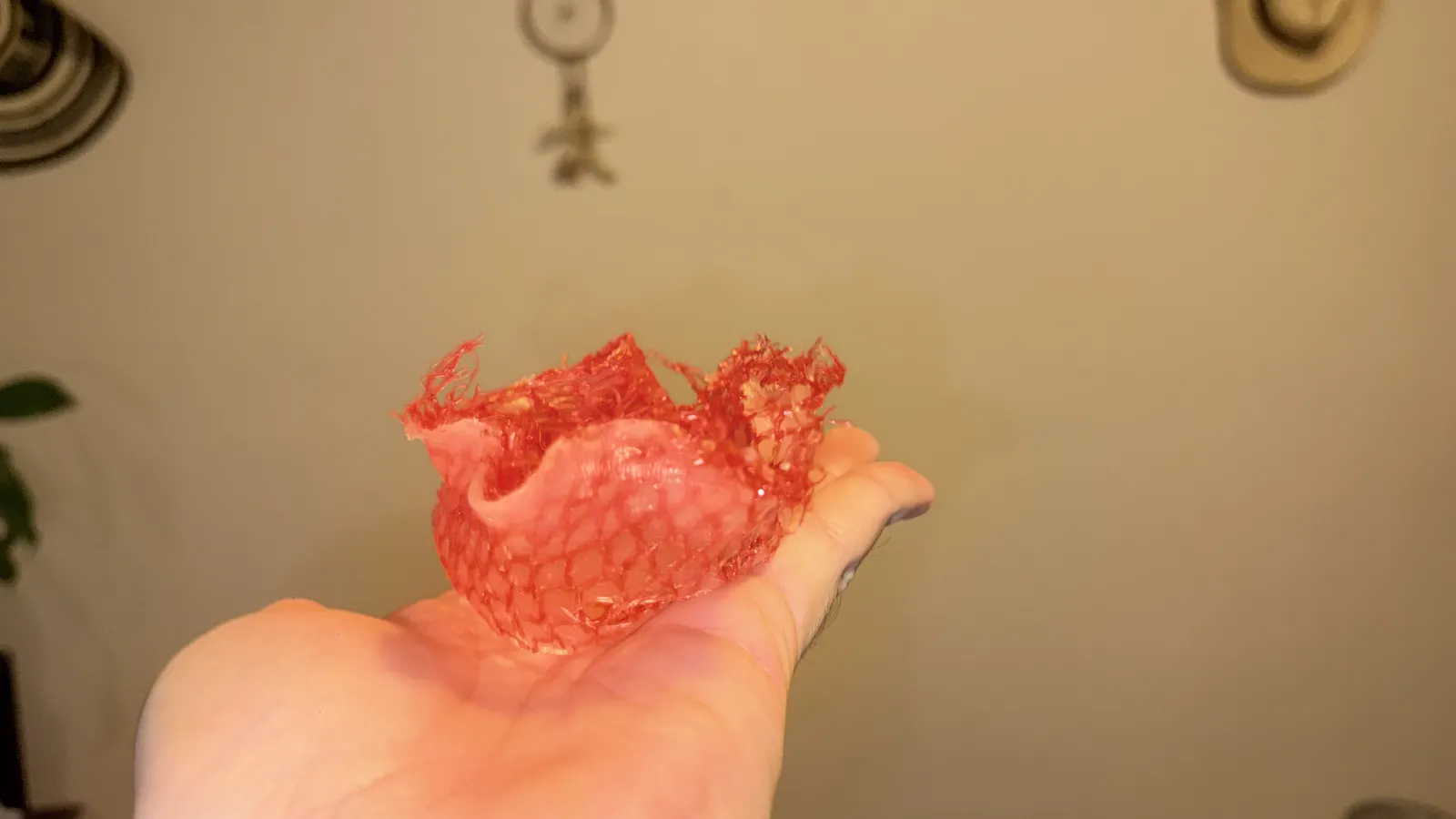
The hand-scale photograph makes the shift to a flexible membrane immediately visible.
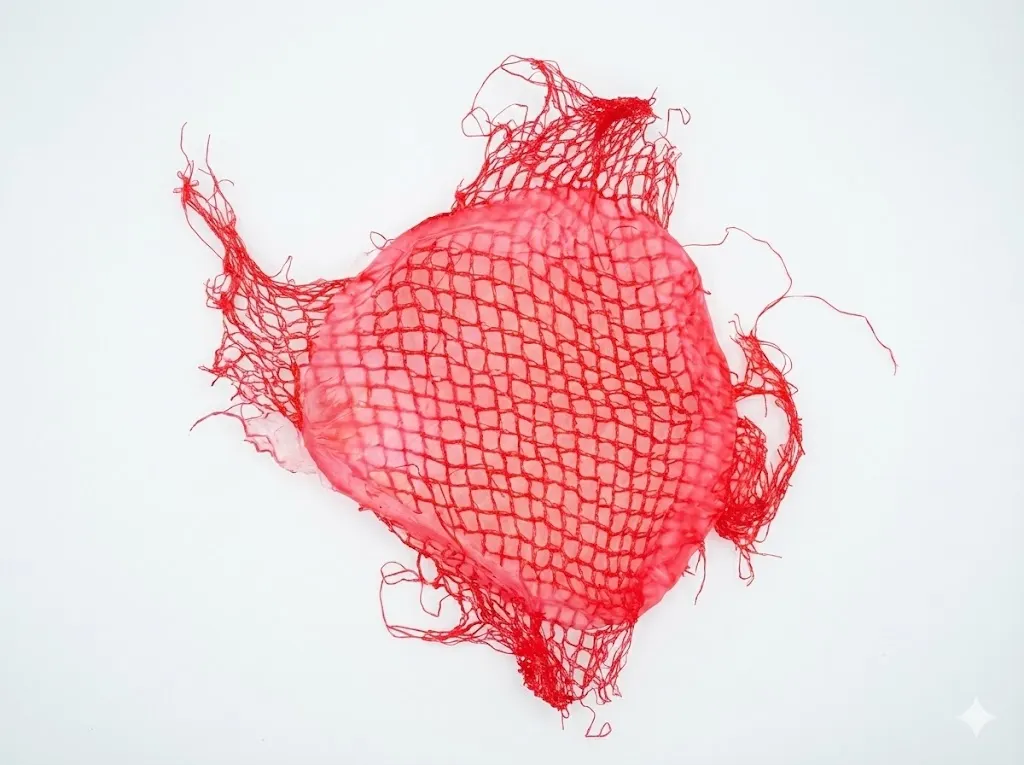
A net-backed sample rather than a deep cast.
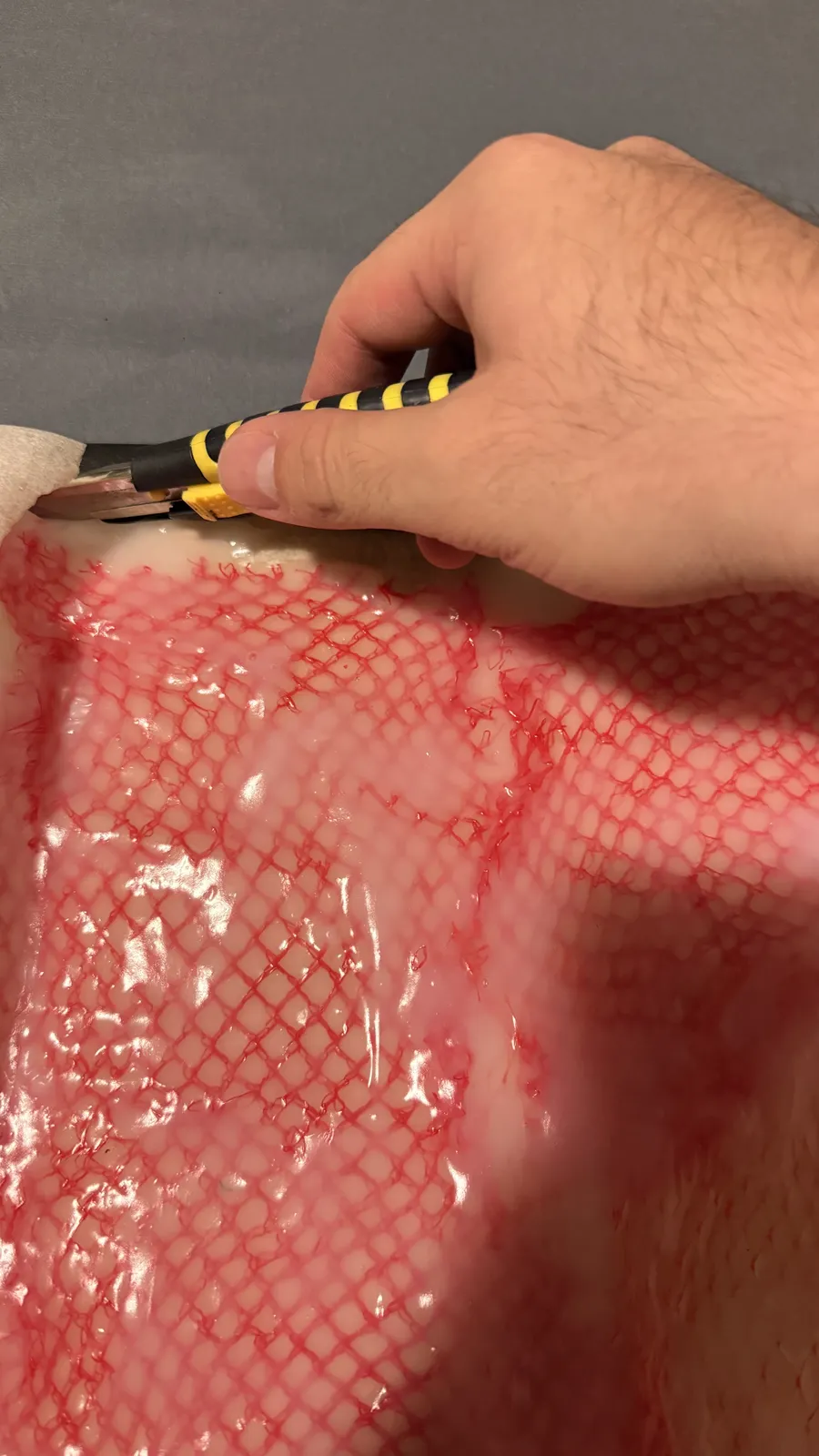
Handling helped compare flexibility and surface quality. This was an informal observation, not a standardized strength test.
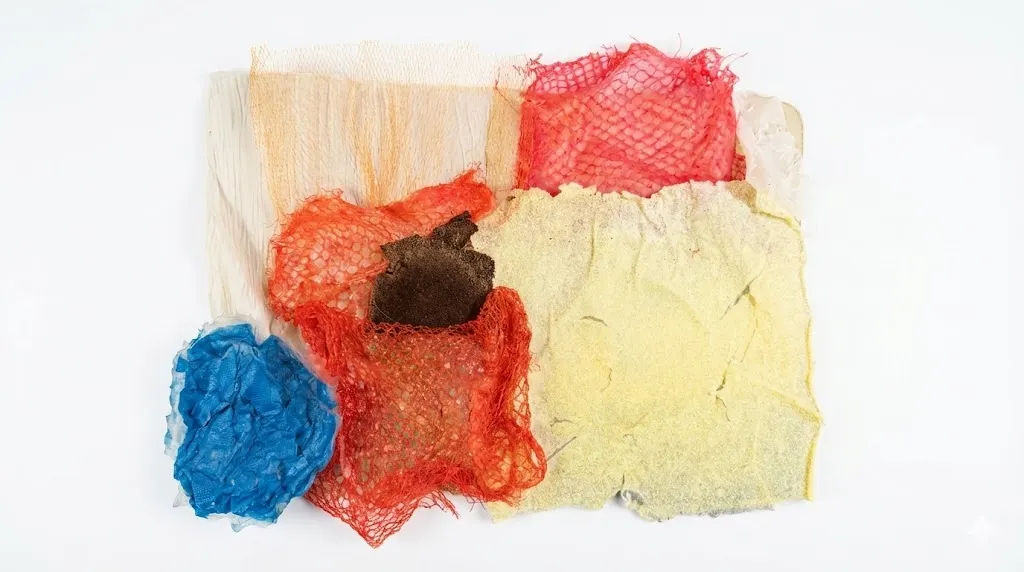
The samples revealed multiple textures, not one uniform material.
Thickness, reinforcement, transfer method and the ambition: from rigid object to tactile library.
A certified textile, structural performance or a compostable whole-object material.
03 / A repeatable starting point
Measure, dip, cure, compare.
After the pivot, the recipe became a baseline for comparison—not a claim that every sample had the same formula. I used measured liquids and mesh squares, then changed support and aggregate to see how the hand-feel and curing response shifted.
Recorded baseline / later trials
- Water
- 125 ml
- Cornstarch
- 1 tbsp
- Glycerin
- 3.6 ml
- Vinegar
- 7.3 ml
- Pectin
- Approx. 0.45 ml
- Mesh square
- Approx. 16 × 16 cm (6 × 6 in)
From the second-stage written method. Measurements describe a baseline batch, not a tested manufacturing specification.
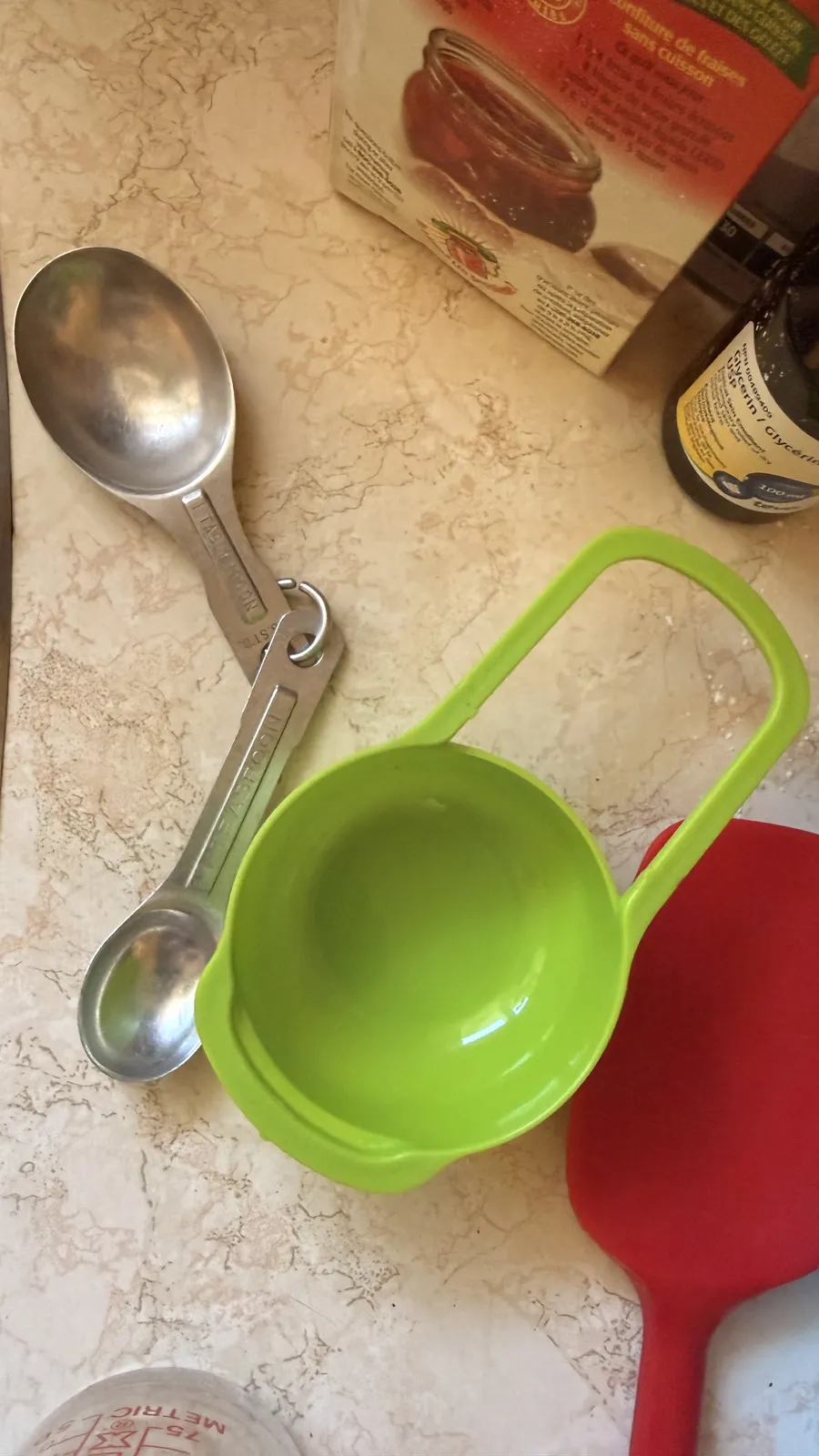
Small volumes and labelled trials made changes easier to compare.
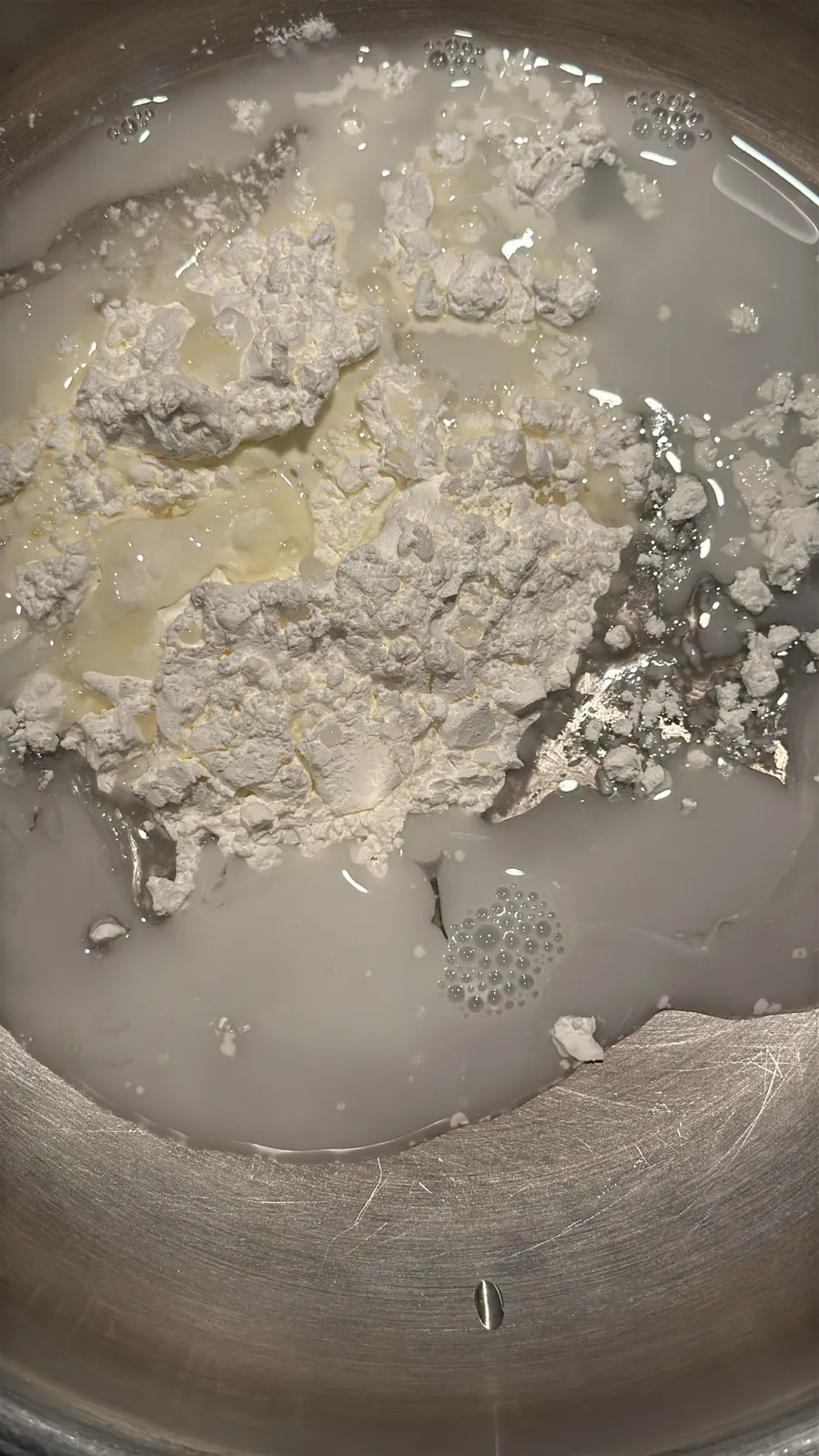
The warm binder was mixed and transferred to mesh or filler.
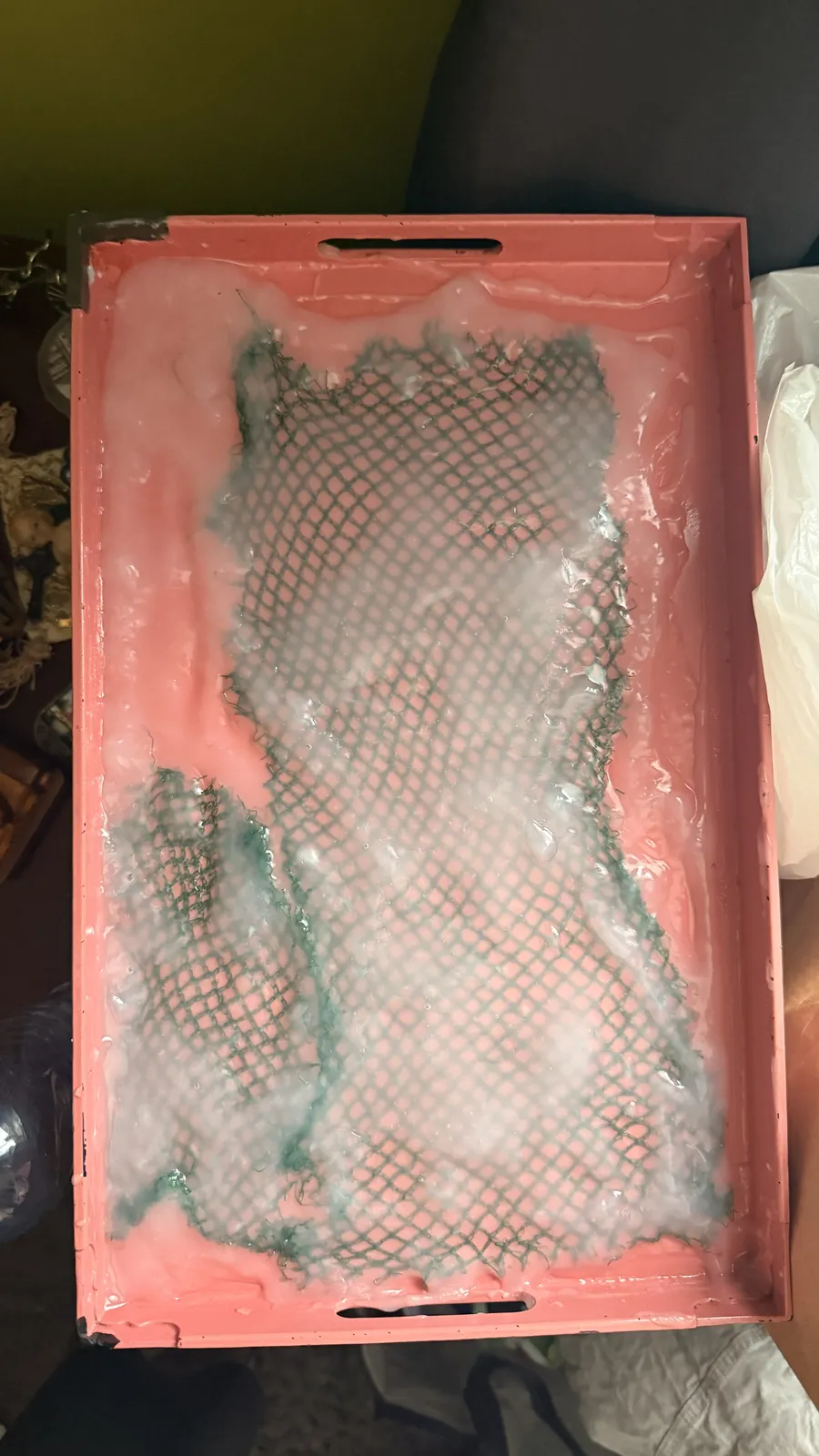
A mesh-backed trial curing in a lined tray.
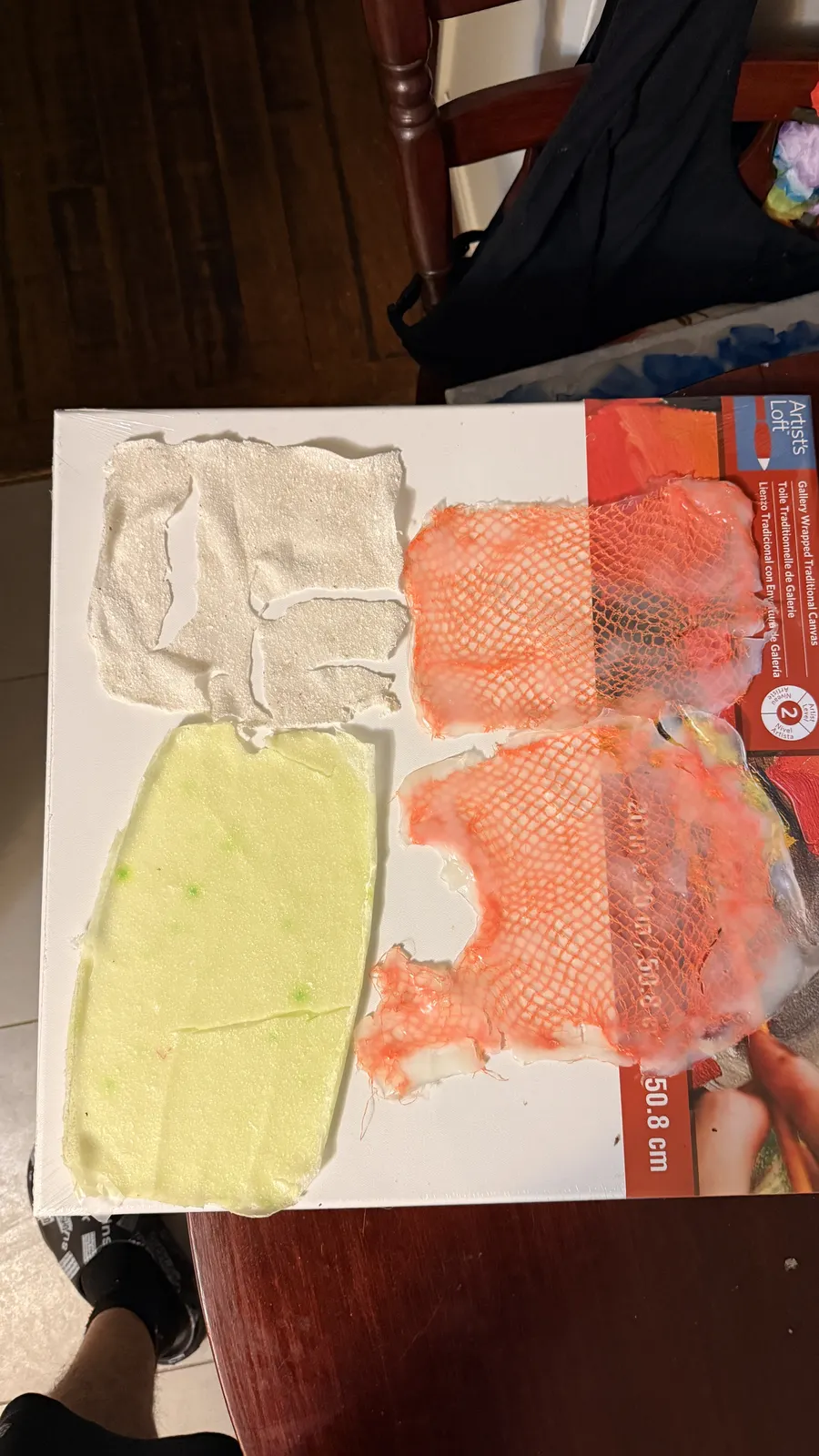
Individual studies were arranged before becoming a continuous field.
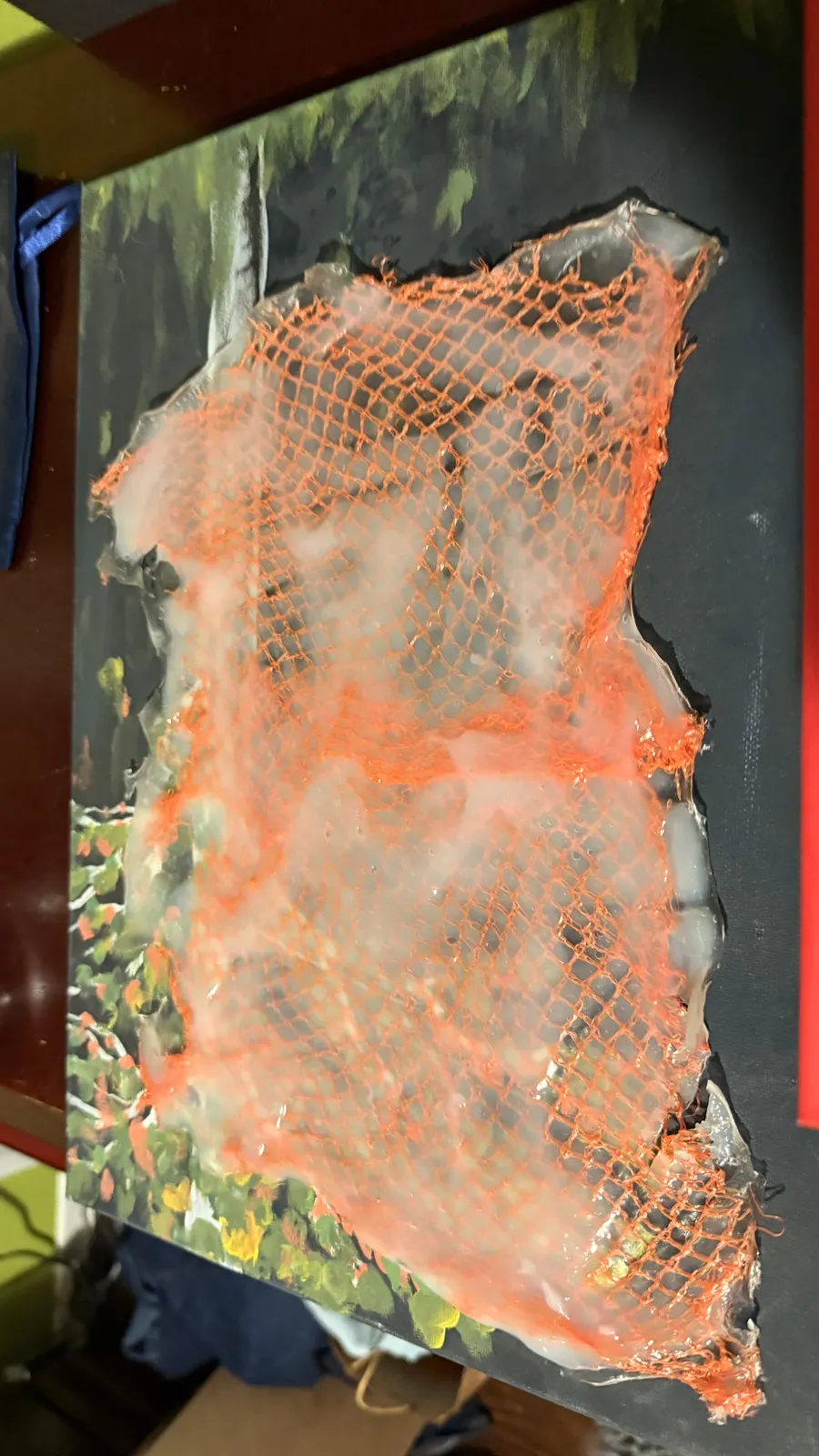
A close view of the binder and mesh relationship during construction.
Selected batch observations
The useful answer was not one perfect sample.
These are my recorded observations, not independent laboratory results. The failures were as informative as the flexible pieces.
See the other recorded tests
Process / original footage
Hand assembly, not a simulation.
A short excerpt from the project’s own making video. The full camera roll is kept in the archive; this edit shows the working scale without asking you to open a presentation.
04 / The physical result
A surface that reads through the hand.
The final presentation reports a 20 × 20 inch (50 × 50 cm) continuous piece assembled from distinct tactile zones: open net, denser coated mesh, soft colour, rougher eggshell and contrasting joins. The earlier approximately 40 × 20 cm (16 × 8 in) study was a separate prototype ambition, not the dimension of this result.
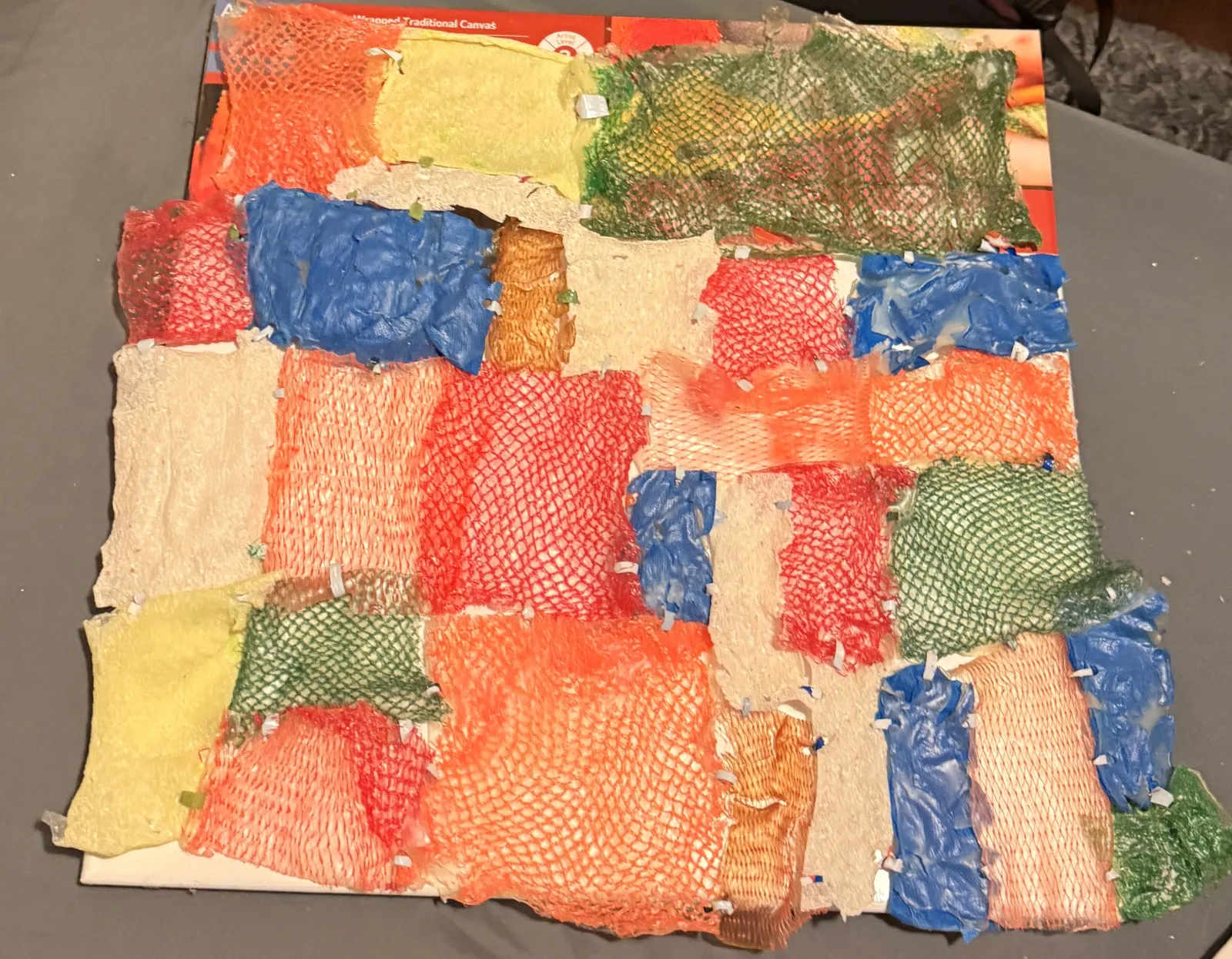
The work in the studio, with its scale and making context visible.
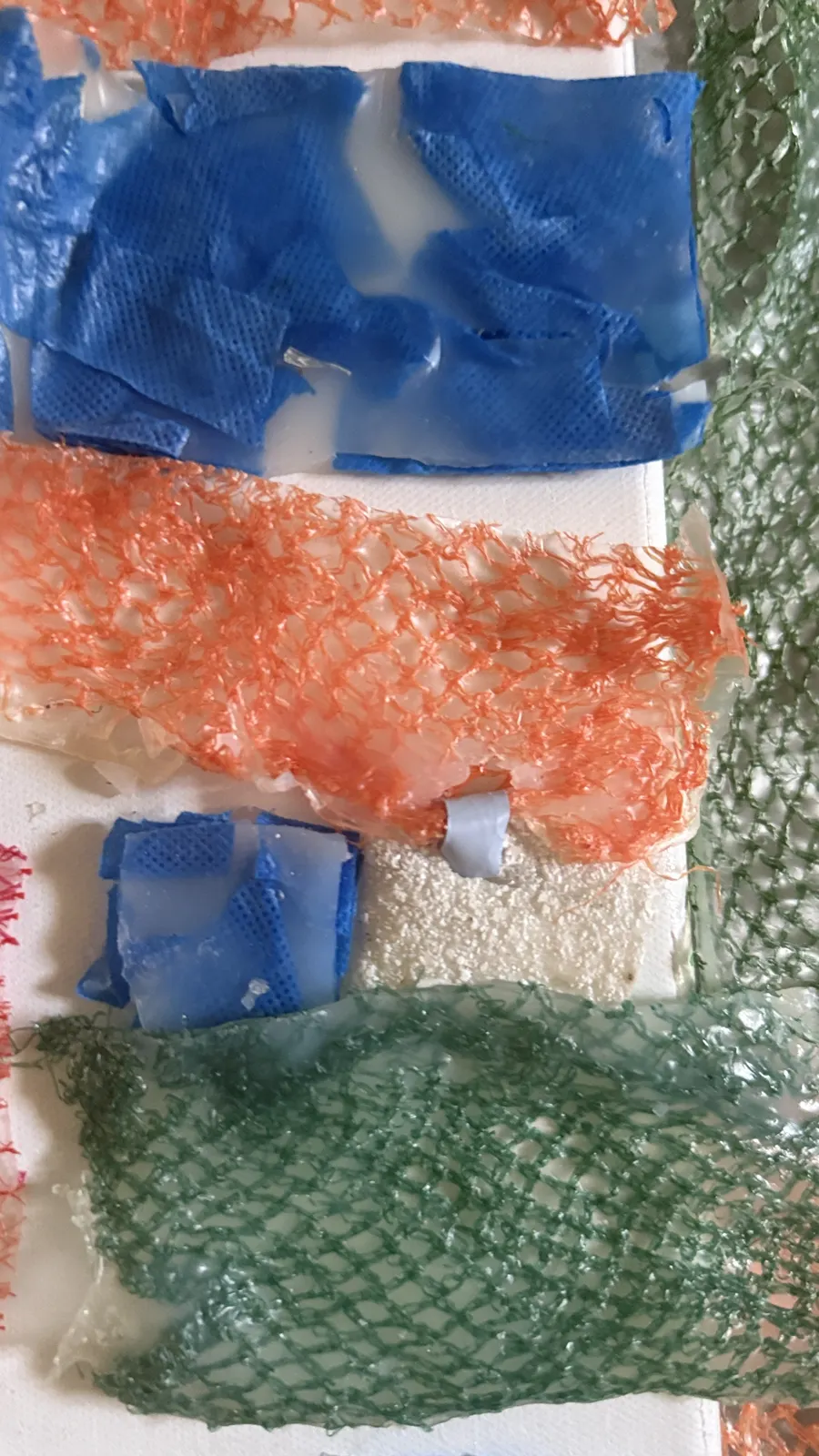
The connection between zones remains legible rather than being hidden under a uniform finish.
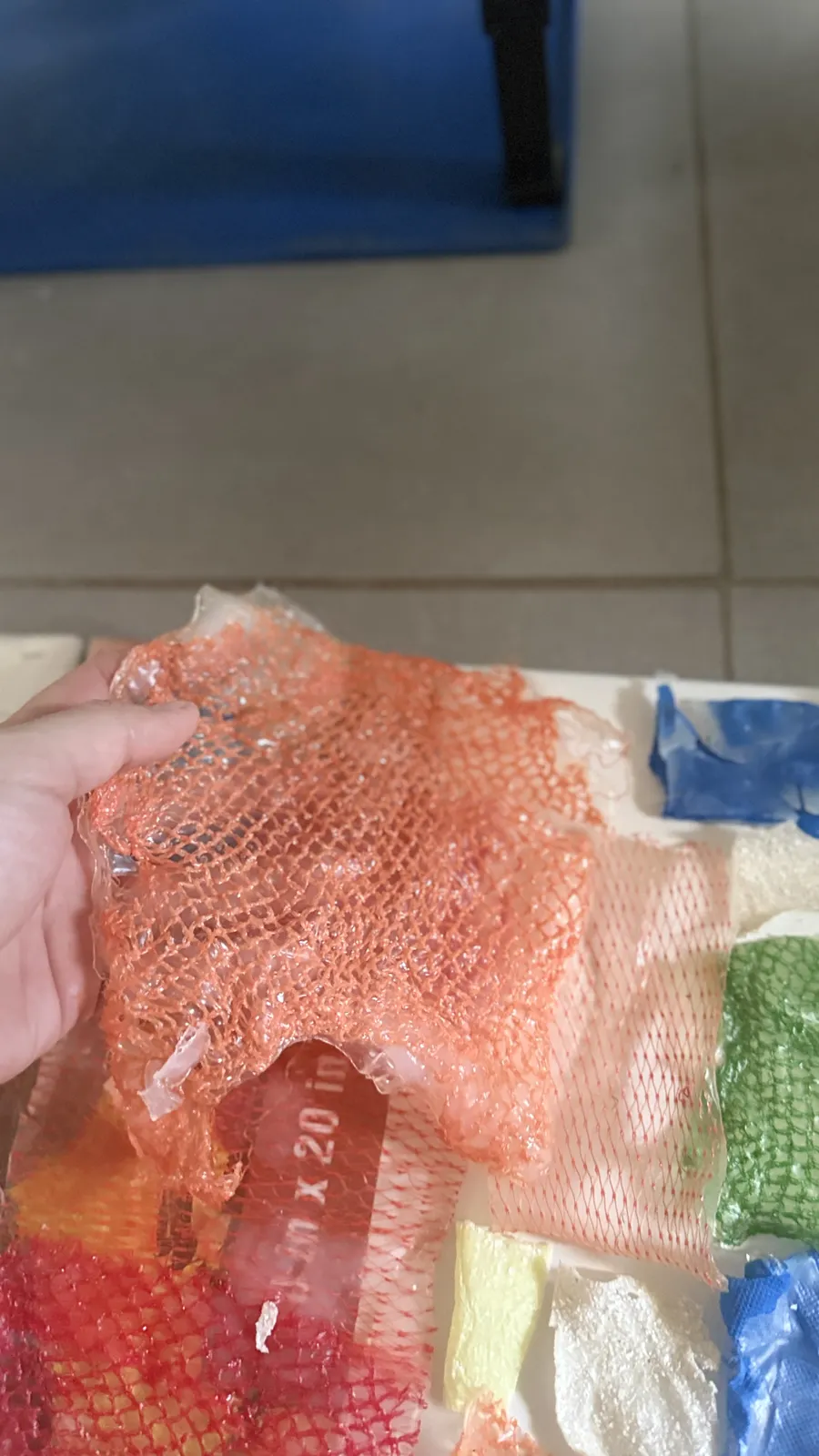
Colour and translucency shift across the layered mesh.
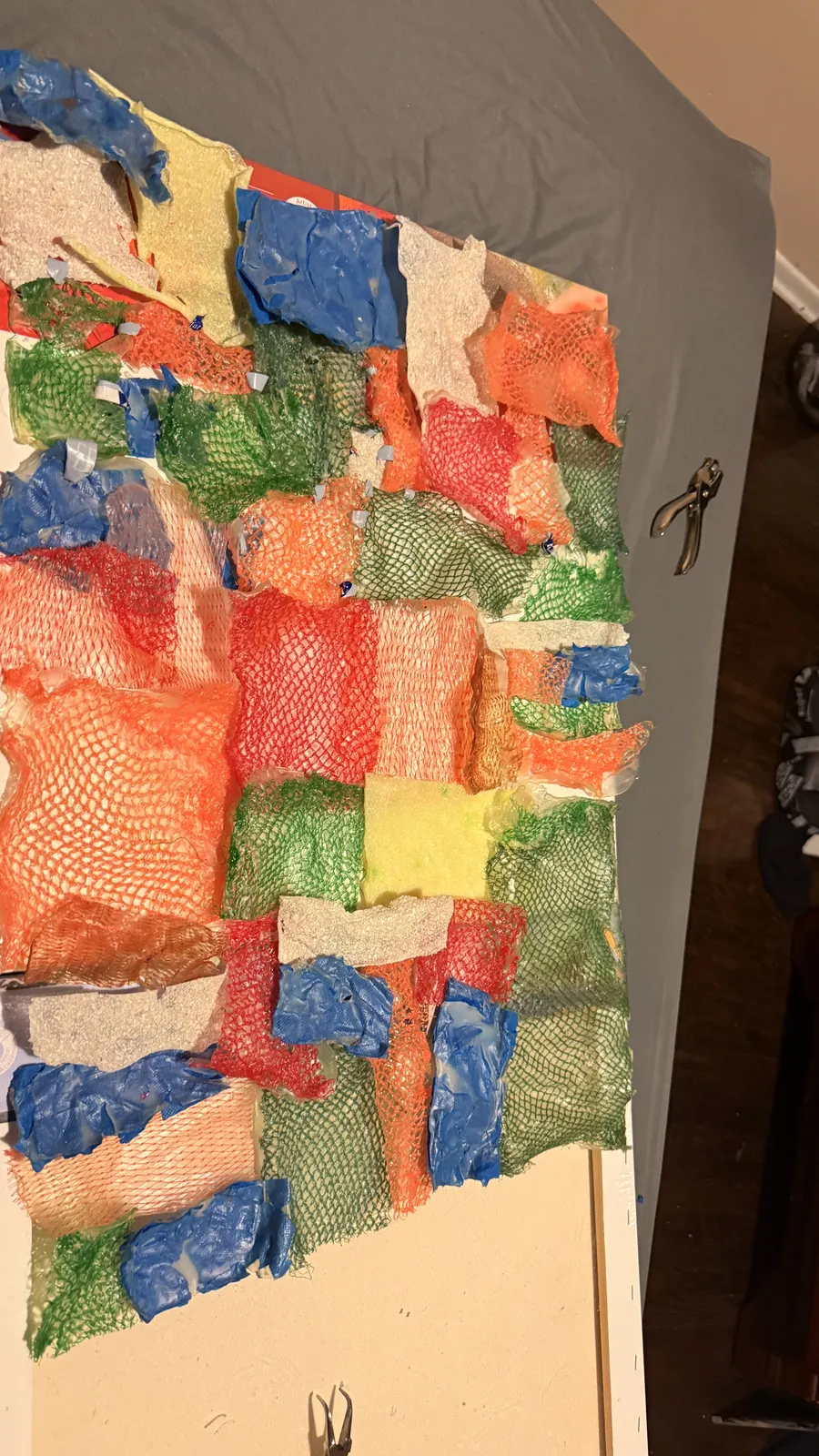
A second physical view of the assembled work.
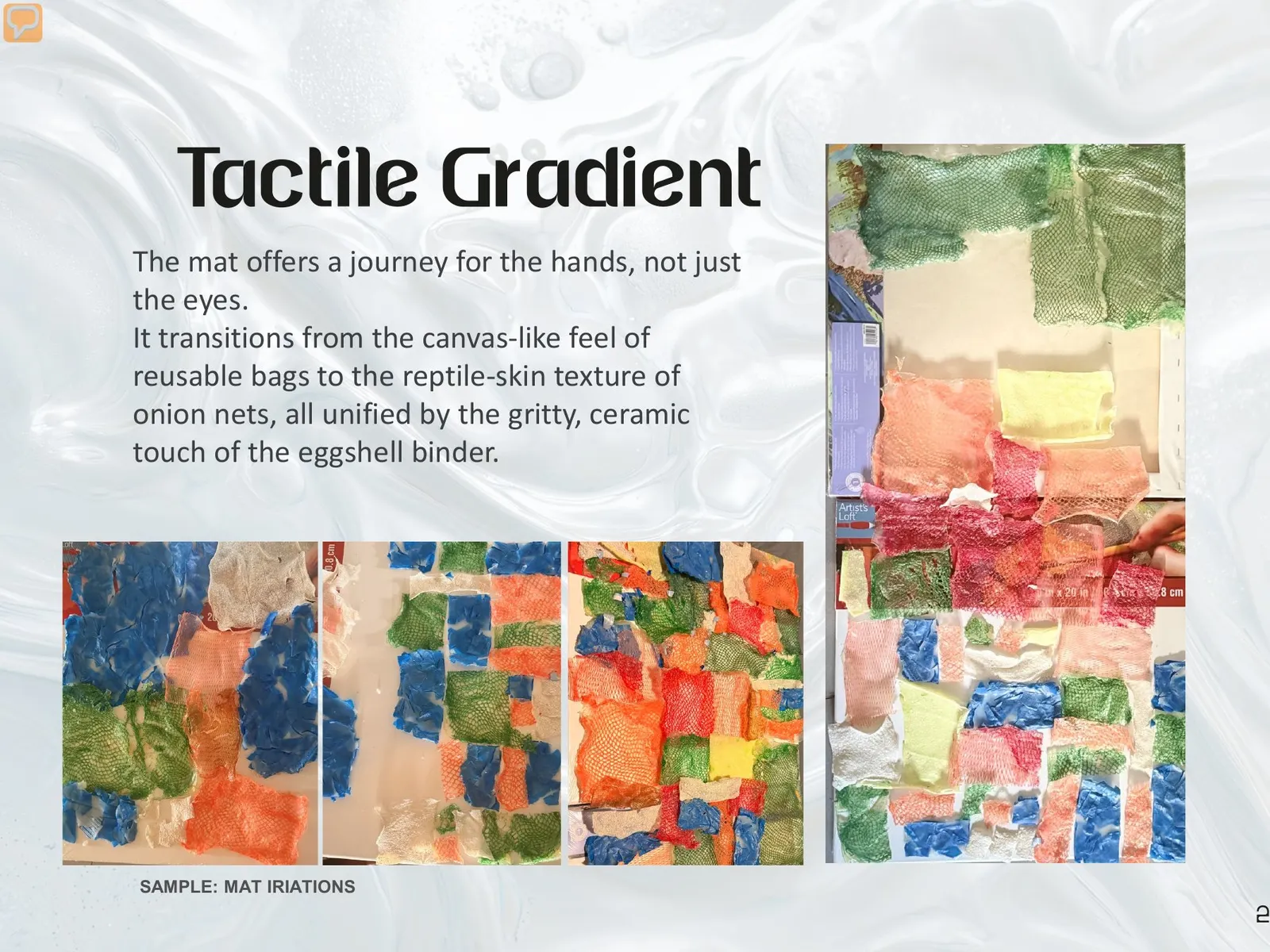
The final presentation’s tactile-gradient map; an interpretation of the physical sample, not another object.
NetWork’s strongest outcome is a change in material thinking: the binder did not become the rigid block first imagined. It became a way to join and differentiate recovered nets into a touchable field.
The final reflection / The Adaptive Alchemist
Making is a cycle, not a straight line.
Alongside the material surface, I wrote a five-stage stewardship manifesto. It names the human part of this process: exhaustion, renewed attention and the judgement that grows from repeated handling. This is my design reflection—not a test result or a claim about the material’s environmental performance.
- FatigueNotice the cost of trying to make use of what a waste system discards.
- SparkLet an ordinary onion net become interesting again when light passes through it.
- CycleKeep failure, breakdown and rest in the process—not only successful samples.
- InstinctMove beyond chance alone; use the hand to judge when a surface can flow or join.
- ValueAsk what another material life could be, without claiming that it has been proven.
See the original manifesto diagram
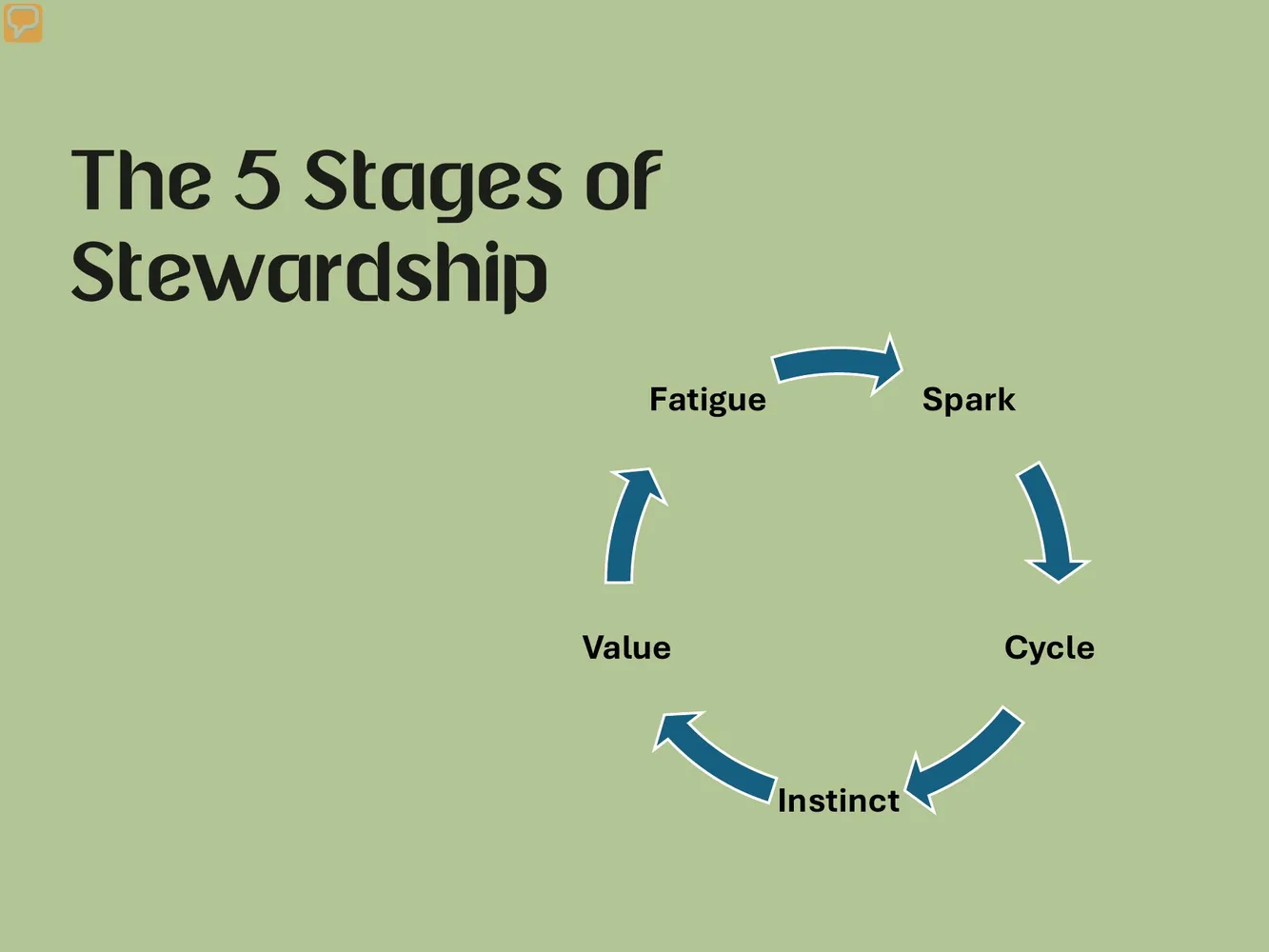
Original final-presentation plate. The on-page wording above is an editorial paraphrase of its five stages.
05 / What this does—and does not—prove
Still a material study.
Not yet a material product.
The samples and surface establish a documented design direction. They do not establish long-term strength, washable use, biological breakdown, safe disposal or a lower environmental footprint. Some meshes are synthetic; a starch binder does not make the full composite compostable.
The presentation speculates about clothing, screens and shelter. Those are prompts for future research, not fabricated or performance-tested applications.
Research, tools and source boundaries
Research lens
I worked from the DIY-materials tradition — small, documented recipe tests — and treated chance as a tool, not an accident. These sources informed the tests; they are not evidence of environmental performance.
Tools with a purpose.
- Kitchen-scale formulation — measured batches made recipe changes comparable.
- Mesh cutting and layering — recovered mesh carried the skin and built the surface from distinct tactile zones.
- Physical sample comparison — failed samples were kept as evidence, not discarded.
- Photography and video — documented each batch and the final surface.
- Word and PowerPoint — the written method and final presentation.
Where AI enters the process.
No AI tools were used on this project. The opening image is a presentation cutout of the photographed physical surface.